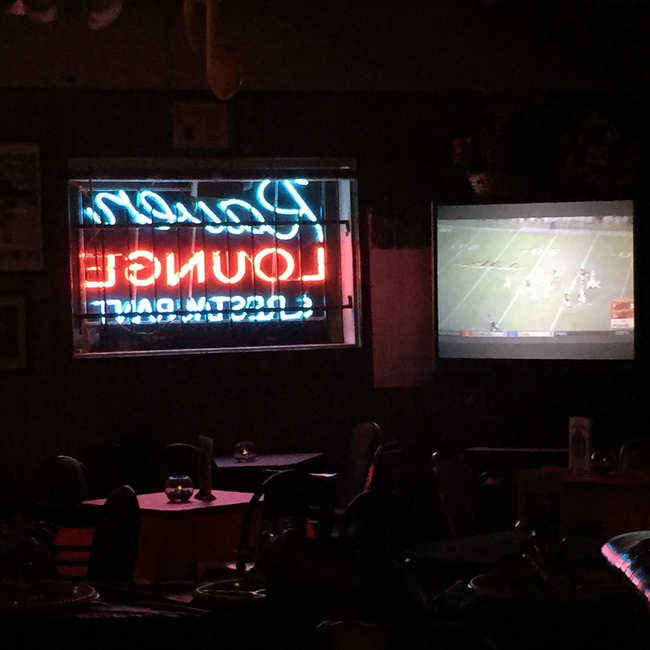
Short week ahead, and I’m hosting Thanksgiving, so much to do. Expect outages ahead, or maybe just a lot of food pictures. I can’t believe how fast the weeks whip by. On Sunday, I scan the week ahead and before I know it, it’s Thursday and I’m pulling myself out of the pool, telling the old lifeguard-coach, “See you next week, Tim.” That’s when my weekend starts, mentally, although two days of work remain at that point. But the attitude is different, no longer a climb but a coast. And then it’s Friday, and I head out to meet pals at a venerable local watering hole. The view across the street:

The scenery around here isn’t for everyone, but it grows on you. The Instagram filters help, too.
I was trying to grab the neon, admittedly in hail-Mary fashion, but I like the way it turned out. Just a tetch of Hopper-ness.
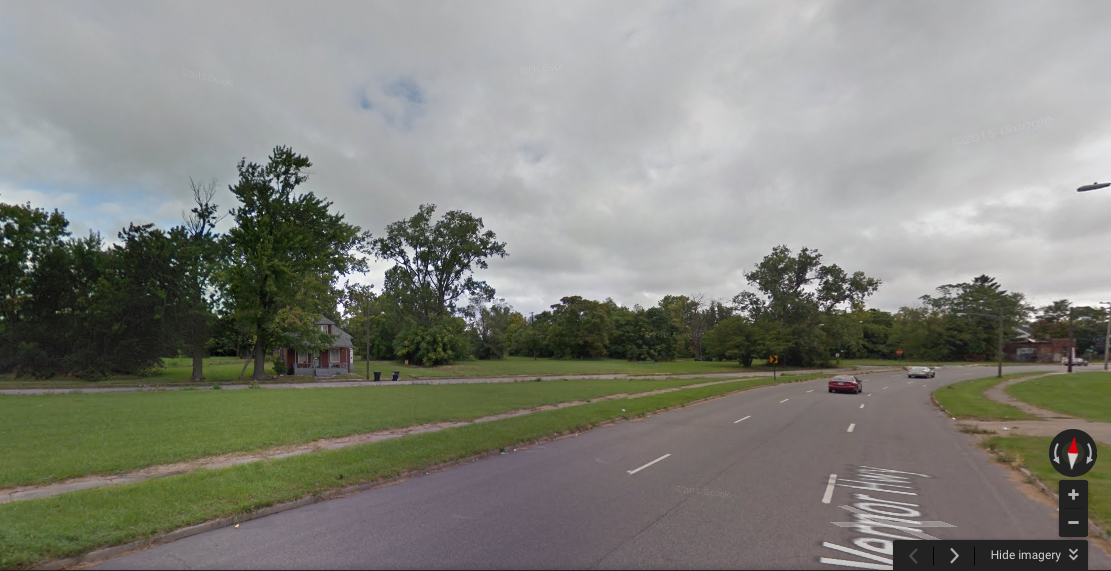
The broad-daylight shot:
But Sunday comes along eventually, and only a short week ahead, but Monday will be a bear. So let’s do this thing.
I work with public-radio people fairly regularly, so this story — about the graying of NPR — struck me. It’s a mix of reactions, equally “that’s too bad, because younger people need to be listening” and “it’s their own damn fault.” The latter is mainly due to the fact one of the local public stations is still playing “Car Talk,” years after half the team died. This seems like the public-radio equivalent of classic-rock stations refusing to move on because the Stones still sound so good, right?
This drives me nuts, too:
Some of the other brand-name talent at NPR illustrates the situation: Talk-show host Diane Rehm is 79; senior national correspondent Linda Wertheimer is 72; legal affairs correspondent Nina Totenberg is 71, and “Weekend Edition Saturday” host Scott Simon is a relative youngster at 63.
I enjoy 25-50 percent of the aforementioned hosts. It’s true, though, that when I go to a book-signing or other event that features a public radio-popular personality, I frequently feel like the youngest person there.
Any other bloggage? If you missed this, which someone posted in the comments last week, don’t. It’s good.
As is this companion piece. They’re both about people voting against their own interests, both absolutely worth your time.
Me, I’m off to tackle Monday.