Is there a curse more cruel than a blank page and a blinking cursor? (Well, duh — cancer, pestilence, ungrateful children.) My mind feels as empty as a bucket at the moment, my concerns few and my resources close at hand (coffee). I moved out to the living room to write because Ruby’s here, posing. For a while she held the stretched-out-low-ears-up position, a relaxed rabbit yoga favorite. But then I came into the room and FEAR RUN PREDATORS, but she stuck around, washed herself for a bit, binkied on the couch and did the Watership Down stretch, so I guess she’s feeling pretty good today.
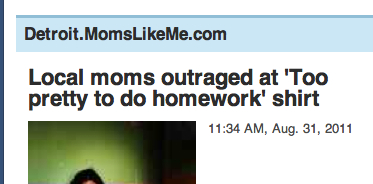
Labor Day weekend, the end of summer. We’ll get another month of shirtsleeve weather, maybe two, but school starts Tuesday and a new schedule will take over the house. I’m googling “new ideas for school lunches” and otherwise meandering around the internet in search of inspiration, which I am not finding. I did find this, however:

May I just say how tiresome I find the Gannett YourCityNameHere.MomsLikeMe.com section? I vividly remember early motherhood, how isolated and unsure I felt, how much I wished my best friend lived next door, and I suppose that audience is a fat pigeon waiting to be plucked, a sheep ripe for fleecing, but please. A section like this on a newspaper’s website automatically drains 50 IQ points from everything that comes in contact with it. MomsLikeMe are always feeling outrage over something stupid, like a T-shirt. For a while I was clipping particularly dumb MomsLikeMe copy, hoping to get a column or essay out of it, until I found the research too tiresome and depressing. When they’re not expressing outrage over T-shirts, MomsLikeMe are looking for lessons in disaster. The stupidest reaction piece to any breaking-news story is the “experts advise on how to talk to your kids about what just happened” angle; it makes steam toot out my ears in comical cartoon fashion. I wonder if the abandoned draft of that piece still sits in my Google Docs…why hey, it does! Started and abandoned in the summer of 2009, here’s how it went:
It’s been a bad year for teen drivers in metro Detroit. Early this summer, five young people died when their car was hit by a train. Just a month or two later, a car being driven at an insane speed entered a subdivision, lost control and hit a brick welcome sign with enough force to fold the car almost 90 degrees and kill all three occupants, ages 19, 17 and 19.
The first story had everything — a teen driving with a suspended license, a 14-year-old victim who’d just been scolded by her mother, eyewitnesses, even a security-cam video of the incident. The second was nearly as vivid; the speeding car clipped a riding lawn mower in the instant before the crash. You’d think a newspaper staff would have all it could handle just reporting the bare facts, but when I looked at the Detroit Free Press website on day three of the train-crash story, there was something more, a “refer line” to a related story.
Is crash a teachable moment? beckoned a link. After the second accident, a similar come-on: Local parent says her “heart is just breaking” over this news.
Not so long ago, these would have been links to a sort of hand-wringing sidebar that seeks to make sense of the senseless, in which an “expert” from a local university or hospital advises parents on how to discuss the tragedy with teen drivers, or some such earnest mush. For a while, “reader service” was all the rage among newspaper editors, and it was thought this kind of carbuncle hanging off a big story would help the bad news go down easier.
But it’s a different world in newspapers today. Both links took me to something even worse than advice from a pediatrician: A “moms like me” website.
With modern families scattered coast to coast, the internet provides the support your mother used to, before she retired to a golf course in Scottsdale. Today’s moms have it so much easier, free to turn on Nick Jr. and sit with their laptops in an electronic coffee klatch with her girlfriends, wherever they may be. The mom sites — city-dot-momslikeme.com is the Gannett brand, but there are others — are looking to cut the contemporary mother out of the newspaper-readership herd and heap her with lots of specialized content. Or, as Indianapolis Star editor Dennis Ryerson wrote in 2007, announcing Indianapolis’ mom-site debut:
“Moms represent a critical user group with huge buying power and a longing for outside contacts and advice. They lead incredibly busy lives and want information that is easy to access, full of utility and as warm and refreshing as their own children. IndyMoms.com focuses on three main elements: social networking, calendars, and photos, lots of photos of children having fun. It’s a living, breathing site where moms meet each other and set their own agenda.”
So far, so good. As a former newspaper journalist myself, I can hardly argue with any publisher wanting to find a new way to make a little money in this dying game. But as a reader, I resent it when I click the second link, the “heart is just breaking” one, and read this:
“talking about being a safe driver, yes, yes, but there were more passengers killed than drivers, so it seems we need to moreso focus on talking about keeping yourself from being an unintentional victim of someone else’s bad judgement, and that is harder. I dunno why I started this thread… check, I know, my heart is just breaking and I had to say something but I just don’t know what to say”
Those earnest sidebars about how to talk to your kids about 9/11 suddenly seem positively Pulitzer-worthy.
—–
2011 me again: Eh, a good start, but I’m not sure where I wanted to go with it. To say MomsLikeMe sux? That’s a blogger’s job nowadays, so here you go. Funny how Ryerson said moms lead “incredibly busy lives.” To read a MomsLikeMe site, you’d think all they had to do was sit around reloading their browsers and pasting dumb Facebook statuses. MomsLikeMe, take your kids to the park — you’ll be a happier mom, and so will your kids.
And now look what happened — I got some inspiration. Nothing like coffee, a rabbit and the Gannett Corp. to give the morning a push.
I guess I’ll take Labor Day off with the rest of the proletariat, so look for me again on Tuesday. A little bloggage before I go? Sure:
I have but a single rabbit, but Coozledad’s vegetarian petting zoo is far more populated. Hello, Skinnerbox.
Uncle Sam puts on his suin’ pants. I’d say it’s about time, but I’m sure someone will figure out a way to spin this as detrimental to the financial industry at this critical juncture in the economic crisis.
A week in the red tent: A year of Biblical womanhood, taken literally.
With that, I wish you a fine weekend. See you Tuesday.