Over the years, I’ve had many opportunities to teach writing, from classroom visits to fourth-graders to adjunct gigs at the local U. I’ve “taught,” so to speak, everything from fiction to journalism, with most falling in the personal-essay category, thanks to my long stint as a columnist. And if I had to boil down the best single bumper-sticker piece of advice I have, it’s this: Tell the truth. If you’re writing in your journal, tell the truth about your day and feelings about it. If you’re writing journalism, don’t make shit up. Fiction uses make-believe to tell truths that readers recognize. If you make the 17 syllables of a haiku paint a particular picture, make sure every brushstroke is correct.
Journalists are big believers in facts, but facts do not always add up to truth, and it’s this that’s been bothering me in recent years. It’s a fact that propagandists have set up vast informational networks that look like journalism, but aren’t. Consumers are too busy, distracted, ignorant or angry to insist on anything better. I don’t think it’s any mystery why I started watching MSNBC during the worst of the Iraq war; as I said of Twitter recently, I needed something that validated the angry voices in my head, and Keith Olbermann filled the bill. (For a while, anyway. Now he just chaps my ass.) Imagine being old and confused and fearful of death, and you can understand the appeal of Fox News pretty clearly.
Add to that the both-sides thing, in which it reporting on Something Bad being done by one politician must be matched by Something Bad done by someone on the other side. So you end up with Donald Trump’s buffet table of outrages contrasted with a private email server, or Uranium One.
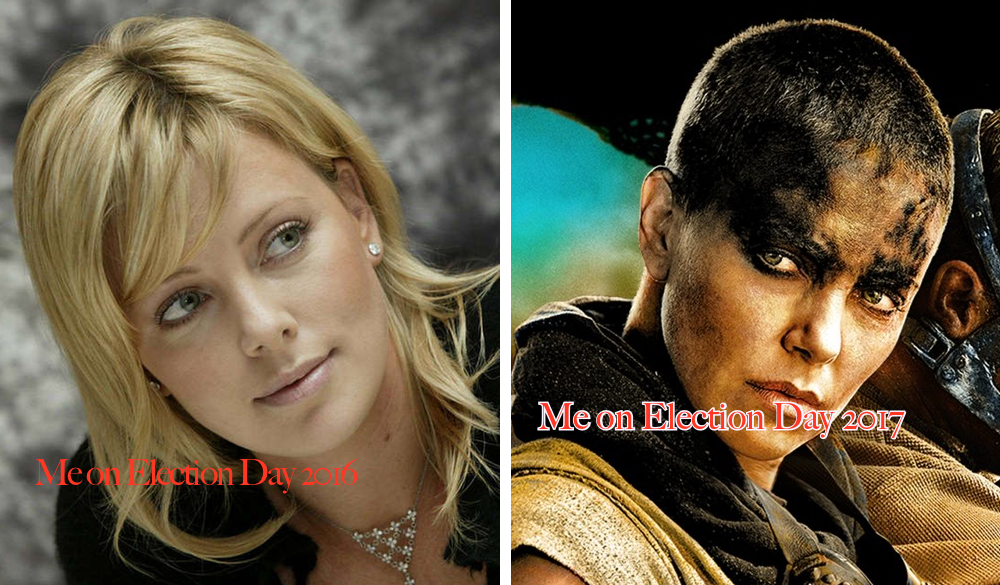
Hey, at least we got some memes out of it. But her emails!
I was thinking about how traditional reporters can work better, smarter, without becoming beholden to one side. Because even though “both sides do it” is trite crap, both sides – all sides – definitely do stupid and newsworthy things that have to be reported on. It’s just that one side is doing so much more of it at the moment. But the pendulum will swing, as it always does.
These thoughts were pinging around my head when I heard this story explained on the NYT morning podcast.
On Sunday afternoon, when Elmer T. Williams’s wife told him that a mass shooting had taken place at a church in Texas, he leapt into action. First, he skimmed a handful of news stories about the massacre. Then, when he felt sufficiently informed, he went into his home video studio, put on his trademark aviator sunglasses, and hit record.
Roughly an hour later, Mr. Williams, 51, a popular right-wing YouTube personality who calls himself “The Doctor of Common Sense,” had filmed, edited and uploaded a three-minute monologue about the Sutherland Springs church shooting to his YouTube page, which had roughly 90,000 subscribers. Authorities had not yet named a suspect, but that didn’t deter Mr. Williams, who is black, from speculating that the gunman was probably “either a Muslim or black.”
… YouTube has long been a haven for slapdash political punditry, but in recent months, a certain type of hyper-prolific conspiracist has emerged as a dominant force. By reacting quickly and voluminously to breaking news, these rapid-response pundits — the YouTube equivalent of talk radio shock jocks — have successfully climbed the site’s search results, and exposed legions of viewers to their far-fetched theories.
It so happens I follow a disgraced former state rep on Facebook, a guy who started out far to the right and since his downfall, has drifted deep into these weeds. And I see this sort of thing on his page all the time. I don’t know if he’s weighed in on the Texas shooting, because he may still be hashing over the Las Vegas shooting. Did you know there was a second shooter? You don’t? You need to stop listening to the lamestream media, then, and here, allow me to show you a bit of video the authorities don’t want you to see.
He has lots of company. I followed a bunch of them back when I was trying to understand them better, and man — there’s a lot of them. And one thing these YouTube people are doing is blanking out the voices of the sane and the professional. You might think, big deal, they’re nuts. And they are, no doubt, or close to it. But their work is surprisingly effective at spreading misinformation at a critical time, in both how the event is processed in real time and in this moment in history. I promise you, you know someone who believes this shit:
His hit productions have included fact-challenged videos like “Barack and Michelle Obama Both Come Out The Closet,” which garnered 1.6 million views, and “Hillary Clinton Is On Crack Cocaine,” which had 665,000. He was admitted to YouTube’s partner program, which allows popular posters to earn money by displaying ads on certain types of videos, and claims to have made as much as $10,000 a month from his channel.
“I like to call myself a reporter who reports the news for the common person,” Mr. Williams said.
Real reporters don’t respond to this, for the same reason you don’t invite the crazy people who send you letters and leave 3 a.m. voicemails on your office phone to lunch. Maybe they should.
Oh, well. Related: How American politics went batshit crazy, an instructive timeline.
And finally, in case you wanted to be made even angrier today, let’s check in with Omarosa, shall we? A great read.
And I live in Wayne County. My previous permanent or semi-permanent addresses were in Franklin, Athens and Allen counties. BOR-ring.